Monday, October 26, 2026 • 7:00 PM • Arena Theater • 214 Main Street
Tickets: $15 General • $12 Arena Theater Members • Under 21 Free
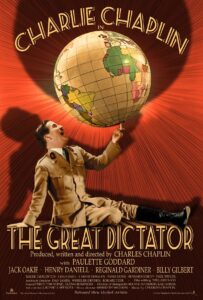
Charlie Chaplin’s The Great Dictator is one of cinema’s boldest uses of comedy as an act of resistance.
Released in 1940, while Adolf Hitler controlled much of Europe and before the United States entered World War II, Chaplin used satire to ridicule dictatorship, antisemitism, militarism and the cult of authoritarian power.
Chaplin plays two roles: a humble Jewish barber and Adenoid Hynkel, the absurd dictator of the fictional nation of Tomania. The comedy can be broad and outrageous, but beneath it lies a serious warning about what happens when fear becomes a political weapon and people surrender their humanity to hatred and authoritarianism.
More than eighty years later, The Great Dictator remains funny, unsettling and remarkably direct in its defense of human dignity.
Film Details
Director: Charlie Chaplin
Release Year: 1940
Running Time: 125 minutes
Rating: G
Genre: Political Satire / Comedy-Drama
Country: United States
Distributor: United Artists
Why The Great Dictator?
Franklin D. Roosevelt’s fourth freedom was Freedom from Fear.
Roosevelt initially described it in international terms: a worldwide reduction in armaments so that no nation would be capable of committing physical aggression against another.
The Great Dictator, released just months before Roosevelt delivered the Four Freedoms speech, shows the world that made such an aspiration urgent.
Chaplin portrays a society in which fear is deliberately manufactured—through militarism, persecution, propaganda and the concentration of power.
By answering tyranny with ridicule and ultimately with an appeal to human decency, The Great Dictator asks audiences to consider what freedom from fear means both between nations and within societies.
About Freedoms on Film
Freedoms on Film uses great movies as a starting point for exploring Franklin D. Roosevelt’s Four Freedoms and what those ideals mean today.
Each screening approaches one of the freedoms from a different perspective. The films are not intended to provide a single political viewpoint or a definitive answer. Instead, they invite us to watch, think, discuss and consider how ideas articulated more than eighty years ago continue to intersect with American life.
2026 Series
September 7 — Freedom from Want
Roger & Me
September 21 — Freedom of Worship
Inherit the Wind
October 12 — Freedom of Speech
All the President’s Men
October 26 — Freedom from Fear
The Great Dictator
November 2 — Democracy
Mr. Smith Goes to Washington
Five films. Four freedoms. One democracy.